Hey there! I’m a supplier of specialty paper machines, and today I wanna chat about the paper water resistance control techniques in a specialty paper machine. Specialty Paper Machine

Understanding the Need for Water Resistance in Specialty Papers
First off, let’s talk about why water resistance is so important in specialty papers. There are tons of applications where you need paper to hold up against water. For example, in food packaging, you don’t want the paper to get soggy when it comes into contact with moisture from the food. In labels for products that might be exposed to water, like bottles in a fridge, water – resistant paper ensures the label stays intact and the information remains readable.
Coating Techniques
One of the most common ways to control water resistance in a specialty paper machine is through coating. There are different types of coatings that can be used.
Wax Coating
Wax is a classic choice for making paper water – resistant. Wax coatings create a physical barrier on the paper surface. When you apply wax to the paper, it fills in the tiny pores and gaps in the paper fibers. This prevents water from seeping into the paper.
The process of wax coating in a specialty paper machine usually involves melting the wax and then applying it to the paper. There are different methods for applying wax, like roll coating or spray coating. Roll coating is pretty straightforward. The paper passes between two rolls, and one of the rolls is coated with wax, which then transfers to the paper. Spray coating, on the other hand, sprays a fine mist of wax onto the paper surface.
The advantage of wax coating is that it’s relatively inexpensive and can provide a high level of water resistance. However, it does have some drawbacks. Wax – coated papers can be a bit difficult to recycle, and they might not be suitable for some food applications due to potential migration of wax into the food.
Polymer Coating
Polymer coatings are another popular option. Polymers like polyethylene or polypropylene can be used to coat the paper. These polymers form a thin, continuous film on the paper surface.
The application of polymer coatings in a specialty paper machine can be done through extrusion coating. In extrusion coating, the polymer is melted and then extruded onto the paper as a thin layer. This creates a very effective water – resistant barrier.
Polymer – coated papers have several advantages. They are more flexible than wax – coated papers and can be used in a wider range of applications. They are also more recyclable in some cases. However, the cost of polymer coatings is usually higher than wax coatings.
Sizing Agents
Sizing agents are chemicals that are added to the paper pulp during the papermaking process. They work by altering the surface properties of the paper fibers, making them less likely to absorb water.
Internal Sizing
Internal sizing agents are added to the pulp before the paper is formed. Common internal sizing agents include rosin and alkyl ketene dimer (AKD). Rosin sizing has been used for a long time. It reacts with the paper fibers and forms a hydrophobic layer on the fiber surface.
AKD is a more modern sizing agent. It reacts with the hydroxyl groups on the paper fibers to form a covalent bond, creating a very effective water – resistant layer. The advantage of AKD is that it provides long – term water resistance and is less affected by changes in pH compared to rosin sizing.
Surface Sizing
Surface sizing is done after the paper has been formed. Starch is a commonly used surface – sizing agent. It is applied to the paper surface, usually by a size press in the specialty paper machine. The starch forms a thin film on the paper surface, which helps to reduce water absorption.
Surface sizing can be adjusted depending on the specific requirements of the paper. For example, if you need a higher level of water resistance, you can increase the concentration of the sizing agent or apply multiple layers of sizing.
Fibre Selection and Treatment
The type of fibers used in the paper also plays a role in water resistance. Some fibers are naturally more hydrophobic than others. For example, softwood fibers tend to be more water – resistant than hardwood fibers.
In addition to fiber selection, fiber treatment can also improve water resistance. For example, fibers can be treated with chemicals to make them more hydrophobic. One common treatment is mercerization, which involves treating the fibers with a strong alkali solution. This changes the structure of the fibers and makes them more resistant to water.
Process Control in the Specialty Paper Machine
Controlling the process in the specialty paper machine is crucial for achieving the desired water resistance.
Drying Conditions
The drying process in the paper machine affects the water resistance of the paper. If the paper is dried too quickly, it can lead to uneven drying and a less effective water – resistant layer. On the other hand, if the drying process is too slow, it can increase production time and cost.
The temperature and humidity during drying also need to be carefully controlled. Higher temperatures can help to set the coating or sizing agents more effectively, but if the temperature is too high, it can damage the paper fibers.
Pressure and Calendering
Pressure and calendering in the paper machine can also affect water resistance. Calendering is a process where the paper is passed through a series of rollers under pressure. This can help to smooth the paper surface and improve the adhesion of coatings or sizing agents.
By adjusting the pressure and the number of passes through the calender, you can control the density and smoothness of the paper, which in turn affects its water – resistant properties.
Quality Control
Quality control is an important part of ensuring that the paper has the desired water resistance. There are several tests that can be used to measure water resistance.
Cobb Test
The Cobb test is a common test for measuring the water absorption of paper. In this test, a known amount of water is placed on the paper surface for a specified period of time, and then the amount of water absorbed by the paper is measured. The lower the Cobb value, the better the water resistance of the paper.
TAPPI T559 Test
The TAPPI T559 test measures the resistance of paper to water penetration. It involves applying a pressure of water to the paper and measuring the time it takes for water to penetrate through the paper.
Conclusion
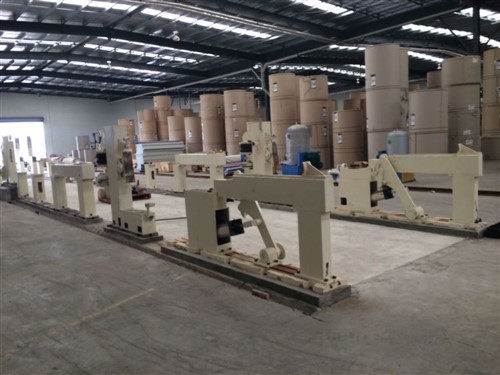
So, there you have it! These are some of the main techniques for controlling water resistance in a specialty paper machine. Whether it’s through coating, sizing, fiber selection, or process control, there are many ways to make paper more water – resistant.
Reel Spool Roll If you’re in the market for a specialty paper machine or want to learn more about how to improve the water resistance of your paper products, don’t hesitate to reach out. We’re here to help you find the best solutions for your specific needs. Let’s have a chat and see how we can work together to take your paper production to the next level.
References
- "Handbook of Pulp and Paper Technology"
- "Papermaking Science and Technology"
- TAPPI Standards for Paper Testing
Shandong Xinhe Paper-Making Engineering Co., Ltd
As one of the leading specialty paper machine suppliers in China, we warmly welcome you to buy high-grade specialty paper machine made in China here from our factory. All customized products are with high quality and competitive price.
Address: No. 26 Huanghe Road, Liaocheng, Shandong, China
E-mail: info@sdxinhe.com
WebSite: https://www.sdxinhe.com/
