If you’ve ever relied on a portable diesel generator to power a job site, a remote home, or a temporary event, you know that performance issues don’t just cause minor inconveniences—they can derail entire projects or leave people without critical power when they need it most. As someone who’s spent the last 12 years working in the portable diesel generator supply business, I’ve seen firsthand how many operators and even small fleet managers skip regular monitoring steps, only to call me in a panic when a unit dies mid-use. The truth is, monitoring your generator’s performance isn’t just about avoiding breakdowns—it’s about extending its lifespan, cutting operational costs, and making sure it works exactly when you need it. Today, I’m breaking down the practical, science-backed ways to track your generator’s performance, based on what we’ve learned from thousands of units we’ve sold and serviced. Portable Diesel Generator

First, let’s start with the basics: what does “performance” even mean for a portable diesel generator? It’s not just whether it turns on. For our customers, that usually breaks down into three core metrics: electrical output consistency, fuel efficiency, and mechanical health. If you miss any of these, you might catch a problem too late. Let’s start with the metric that matters most to end users: electrical performance. A generator that produces inconsistent power can damage sensitive equipment—think power tools, medical devices, or sound systems—far faster than a total breakdown, and we’ve had more than a few customers come back to us with expensive machine repairs because their generator’s voltage fluctuated wildly during a wedding or a construction pour.
So how do you monitor electrical output accurately? The gold standard here is a digital multimeter, but not just any basic model. We recommend a true RMS (Root Mean Square) multimeter—this is key because it measures the actual power delivered to AC loads, not just a rough average, which is critical for variable loads common in portable setups. Most portable generators have a rated voltage (usually 120/240V for residential or light commercial use) and a tolerance range of ±5% that’s considered safe for most equipment. Here’s the step-by-step process that our service team teaches every new customer: when you deploy your generator, first let it run for 10 minutes at half load to warm up—cold engines often output inconsistent voltage. Then, connect your multimeter to the generator’s output terminals, set it to AC voltage, and test both legs (if it’s a 240V unit) for 30 seconds each. If the reading is outside that ±5% range, you’re looking at a potential issue—could be a faulty alternator, loose wiring, or a regulator that needs calibration.
Beyond steady voltage, you need to monitor frequency, measured in hertz (Hz). Most generators are designed to run at 60 Hz in North America and 50 Hz in Europe, and frequency fluctuations beyond ±1 Hz can cause motors to run too fast or slow, leading to overheating or burnout. The same true RMS multimeter will have a setting for frequency, so that’s easy to test. We also recommend for regular users—like a landscaping company that uses the same unit weekly—to log these readings every time you start it. A quick notebook entry or a note in your phone is enough; over time, you’ll spot patterns, like your unit running at 58 Hz every time it hits 90 degrees outside, which could point to a air intake restriction that’s worse when the engine has to work harder in heat.
Next, fuel efficiency is a big one for our customers, because diesel isn’t cheap, and wasted fuel cuts into their bottom line. Monitoring fuel use isn’t just about tracking how much you put in the tank—it’s about calculating brake specific fuel consumption (BSFC), a metric that measures how much fuel is used per unit of power produced. A healthy portable diesel generator will have a BSFC of around 0.25 to 0.35 liters per kilowatt-hour (L/kWh) at full load; if that number jumps to 0.4 L/kWh or higher, you’ve got a problem. How do you calculate this? It’s simple: first, make a note of how many liters of diesel you add to the tank. Then, record the total number of kilowatt-hours (kWh) your generator produced during that run—most tools or appliances will list their wattage, so add them up, divide by 1000 to get kWh. If you have an aftermarket fuel flow sensor (a device we often recommend for heavy use units), it will track this automatically, but even for casual users, manual calculation works.
We’ve seen a lot of things cause poor fuel efficiency: dirty air filters, which make the engine work harder to pull in air, leading to incomplete combustion, or clogged fuel injectors that don’t atomize fuel properly. Last year, a customer in Texas called us complaining that their portable generator was using 20% more fuel than it should while powering a small mobile clinic. We had him test the BSFC, and sure enough, it was way over the normal range. A quick air filter replacement fixed the issue, and his fuel use dropped right back to expected levels. That’s exactly why monitoring this metric pays for itself—we estimated he saved around $300 a month in fuel costs after that simple fix.
The third core area of monitoring is mechanical health, and this is where a lot of new users slip up because it’s not as visible as voltage or fuel use. For portable diesel generators, the key mechanical metrics are oil pressure, engine temperature, exhaust smoke, and run time. Let’s break each down. Oil pressure is critical because diesel engines are designed to run with consistent oil pressure; low pressure means parts aren’t lubricated, and a seized engine can cost thousands of dollars in repairs. Most modern portable generators have a built-in oil pressure sensor that triggers an automatic shutoff if pressure drops too low, but we still recommend checking it manually every 20 hours of use—sometimes sensors can be faulty, so a manual check is a backup. Use an oil pressure gauge (our service team keeps one in every service truck) to confirm readings: a healthy idle oil pressure is 10-15 PSI, and at full load, it should be 30-60 PSI. If it’s below that, you might have a leak or a worn oil pump.
Engine temperature is another big one, especially for portable units that are often used in dusty or hot environments. Overheating is the leading cause of generator breakdowns in the field, per data from the Power Equipment Association. Most generators have a temperature gauge, but again, don’t rely solely on that. If the unit is running in direct sun, or on a job site with limited airflow, check the surface of the engine with an infrared thermometer (a cheap tool, less than $50, that’s worth every penny) when it’s at full load. If it’s hotter than 220°F, that’s too high. Common causes here are blocked radiator fins (dust and dirt build up easily on portable units) or a failing cooling fan. We had a customer last summer whose generator overheated on a construction site in Arizona; by the time he noticed, the head gasket was blown, which meant a $1,800 repair, plus a week without power for his crew. If he’d monitored engine temperature, he could have just blown out the radiator fins with compressed air, a 5-minute fix that would have prevented the whole issue.
Exhaust smoke is a visual indicator that’s often overlooked. When you first start a cold generator, a little white smoke is normal, but if it continues after 5 minutes, that’s a sign of unburned fuel, usually from dirty injectors or incorrect ignition timing. Black smoke means too much fuel is being burned, which ties back to fuel efficiency we talked about earlier, or a restricted air filter. Blue smoke means oil is leaking into the combustion chamber, which is a sign of worn piston rings or valve seals—this is a problem that will get worse over time, so catching it early can prevent major engine damage. And for run time: tracking how many hours your generator has run is non-negotiable, because every component has a recommended service interval (oil changes every 50 hours, filter changes every 100 hours, etc.). We have a simple rule with our customers: if you track run time, you can double your generator’s lifespan. It’s that straightforward.
For heavy-duty users—like event companies that use their generators every weekend, or mining operations that rely on portable units for remote sites—we recommend adding a portable monitoring device to their setup. These devices plug into the generator’s OBD-II port (many modern models have this) or connect via Bluetooth to your phone, and track all the metrics we talked about: voltage, frequency, oil pressure, temperature, fuel use, and run time, in real time. Some even send alerts to your phone if a metric goes outside the normal range, so you don’t have to be standing right there to catch a problem. Last year, we worked with a utility company that uses 20 portable generators for temporary power outages. They installed these monitors on all units, and cut unplanned breakdowns by 70% in six months. The investment in the monitors paid for itself in fuel savings and avoided service calls in less than a quarter.
Wait, but I should address a common question I get all the time: is monitoring really necessary for casual users? Like, someone who only uses their generator once a year during a storm. Our answer is always yes, but it’s a simpler process for low-use units. If you only deploy it once or twice a year, do a quick test before you need it: check the oil level, add fresh fuel if it’s older than 30 days (diesel goes bad over time), run it for 15 minutes while testing voltage and frequency, and listen for any unusual noises. We’ve seen too many people pull their generator out of the garage during a power outage, only to find the oil is low, or the fuel is stale, or the alternator is faulty, and they’re stuck without power when it matters. A 10-minute pre-use check is all it takes to avoid that.
Now, let’s talk about common mistakes we see that people make when monitoring their generators. First, they only test the generator when it’s under full load. But generators run at partial load most of the time, especially for portable units powering a mix of tools or appliances. Testing at full load gives you a baseline, but you need to check performance at different loads to get a full picture. Second, they ignore minor issues. If your generator’s voltage is consistently 4% low, that might not seem like a big deal, but over time, it can wear out sensitive equipment. Third, they don’t document their readings. Writing down what your generator’s normal performance looks like is the only way to spot when something is off. A lot of people think they’ll remember, but after a few months, it’s hard to tell if a 58 Hz reading is normal or a problem.
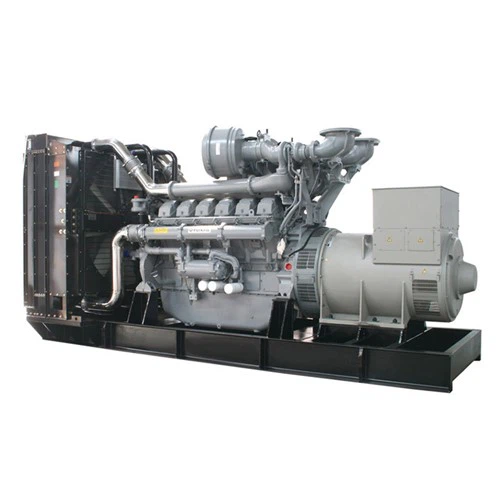
At the end of the day, monitoring your portable diesel generator’s performance isn’t about being overly technical—it’s about being proactive. We’ve built our supply business on helping customers get the most out of their generators, and the number one tip we give every new client is: know your unit, track its metrics, and address small issues before they become big, expensive problems. If you’re in the market for a new portable diesel generator, or you want to upgrade your current setup with monitoring tools, we’re here to help. We offer customized solutions for every use case, from casual home backups to heavy commercial job sites, and our team is always available to answer questions about monitoring, maintenance, or anything else related to your generator. Don’t wait for a breakdown to figure out how well your unit works—start monitoring today, and you’ll save time, money, and stress down the line.
Household Diesel Generator References
- Power Equipment Association. (2022). Portable Generator Maintenance and Performance Monitoring Best Practices. National Association of Power Equipment Distributors.
- Diesel Engine Technology Council. (2021). Brake Specific Fuel Consumption Standards for Small Industrial Diesel Generators. International Council on Combustion Engines.
- Occupational Safety and Health Administration (OSHA). (2020). Portable Generator Safety and Performance Guidelines for Construction Sites. U.S. Department of Labor.
- Generator Exchange. (2023). Field Data on Portable Generator Failure Causes and Prevention. Global Power Equipment Benchmarking Report.
Dianbida Power Equipment (Jiangsu) Co., Ltd.
We’re well-known as one of the leading portable diesel generator manufacturers and suppliers in China. We warmly welcome you to buy advanced portable diesel generator at competitive price from our factory. If you have any enquiry about pricelist and quotation, please feel free to email us.
Address: No. 23, Nanhuan Road, Jiangdu District, Yangzhou City, Jiangsu Province
E-mail: 19962469616@163.com
WebSite: https://www.js-dbdpower.com/
