Hey everyone, Fermentation System
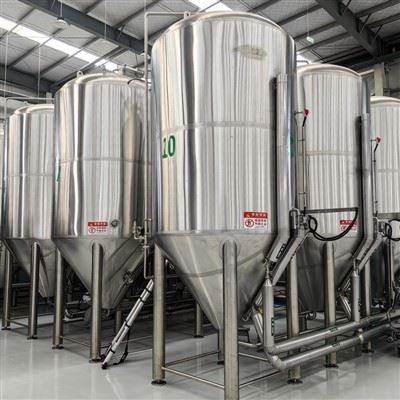
If you’re in the bioproduction space—whether you’re making specialty enzymes, probiotics, biopharmaceuticals, or even plant-based ingredients—you’ve probably heard the word “yield” thrown around like it’s the holy grail of fermentation. And if you’re working with a fermentation system supplier (that’s us, fyi), I bet you’ve had customers come in and ask, “How much yield can I get with your equipment?” like it’s a simple answer. Spoiler: it’s not. But that’s exactly what I want to break down today—because getting clear on fermentation yield isn’t just about selling more gear, it’s about helping you actually scale your process without pulling your hair out.
First off, let’s stop with the fancy jargon and define it like we’re grabbing coffee. Fermentation yield, in plain terms, is how much of your desired product (let’s say that’s a batch of lactic acid, or a batch of yeast for a probiotic) you get out of your system compared to the raw materials you put in. But here’s the catch: it’s not a one-number-fits-all thing. There’s volumetric yield (how much product per liter of your bioreactor, per batch), molar yield (how much product per mole of sugar you feed in), and overall process yield (total product after you purify it, not just what’s in the tank). I’ve seen so many new biotech teams mix these up and get disappointed when their “theoretical yield” never lines up with real-world results—and that’s on both sides, honestly. As a fermentation system supplier, we don’t just sell tanks; we help you untangle which yield metric actually matters for your specific goal.
Let’s talk about the biggest myth I run into: that yield is all about the bioreactor itself. Yeah, the system you use matters—way more than some people think. For example, a well-mixed, aerated stirred-tank bioreactor (STR) that’s calibrated for your organism is going to perform way better than a janky, outdated tank that has dead spots where microbes get starved of oxygen. But here’s the thing: if your yeast is dying because you’re feeding them too much sugar too fast, no fancy tank will fix that. Yield is a team effort between the equipment, the strain you’re using, the feed strategy, and the process control. I had a customer last year—they were making a specialty enzyme for pet food—who had a 12% yield on their old system, came to us saying they needed a 20% yield to make the project profitable. We swapped out their old bioreactor for our modular system that has real-time pH and dissolved oxygen (DO) probes, tweaked their feed rate using our process control software, and they hit 19.8% yield on the first test batch. That’s not magic—that’s matching the system to their existing strain and process, not just selling them a bigger tank.
Now, let’s get into the nitty-gritty of what actually impacts yield, because if you’re optimizing yours, these are the levers you can pull. First, the organism itself. Some strains are naturally high-yielders, but others are optimized for stability or speed (which might lower yield). We work with a lot of contract development and manufacturing organizations (CDMOs) that tweak their strains for specific projects, and we always make sure our fermentation systems are flexible enough to handle both wild-type and engineered strains. For example, anaerobic bacteria (like those used for biofuels) don’t need as much aeration, but they’re super sensitive to pH shifts. Our systems have automated pH adjustment that works way faster than manual tweaks, so they don’t crash mid-batch. That directly boosts yield because you’re not losing product to dead organisms.
Next up, mass transfer—this is a big one that a lot of people sleep on. Mass transfer is how oxygen (or whatever gas your microbes need) moves from the gas phase to the liquid phase, and then into the cells. If your bioreactor has poor mass transfer, even if you’re pumping in tons of air, the microbes are suffocating. For aerobic processes (think antibiotics, insulin, yeast for baking), this is make-or-break. Our fermentation systems use impeller design and sparging rates that are calibrated for optimal mass transfer, and we provide real-time data so you can adjust on the fly. I remember a customer doing batch fermentation for monoclonal antibodies (mAbs) who was getting 0.5 g/L of product, and they thought it was their cell line. Turns out, their old tank’s impellers were too small, so oxygen was only reaching the top 20% of the liquid. We upgraded their system’s impellers, and they jumped to 0.8 g/L—same strain, same feed, just better mass transfer. That’s a 60% yield increase without changing a single thing about their process except the gear.
Then there’s process control. If you’re manually adjusting temperature, pH, and feed rates, you’re going to have batch-to-batch variability, which kills overall yield. We build our systems with IoT-enabled controls that track every parameter in real time—you can check it from your phone, set automated triggers (like “if DO drops below 30%, speed up aeration”), and even log data for regulatory stuff (super important for biopharma). A lot of new startups think they can get by with basic manual controls, but once they scale to 1000L batches, that variability makes it impossible to hit consistent yield. We had a customer that was doing R&D on a small 10L scale with 15% yield, and when they scaled to 500L with a manual system, they dropped to 8% because parameters weren’t uniform across the tank. Switched to our automated system, and they got 14.5% on the first scaled batch. That’s the power of consistent process control—no guesswork, just reliable yield.
Wait, let’s not forget about downstream processing either. Because yield isn’t just what’s in the bioreactor—it’s what you can actually purify at the end. If your fermentation broth has a bunch of contaminants, or the product is degrading before you extract it, you’re losing a ton of potential yield. Our fermentation systems are designed with harvest-friendly designs—like easy-to-empty tanks with minimal residual volume, and even in-line filtration options that let you remove cells or debris right after fermentation, without moving the broth around. That cuts down on product loss during downstream, so your overall process yield (not just the bioreactor yield) goes up. I had a customer making a probiotic powder who was losing 25% of their viable cells during transfer from their old tank to the filter. Our tank has a bottom outlet that’s designed to minimize shearing of sensitive cells, so that loss dropped to 5%—that’s an extra 20% yield just from the system’s design.
Now, let’s talk about what “good yield” actually looks like, because I get so many customers asking for a number without context. For specialty chemicals, molar yield might be 60-80% (how much product per sugar fed), while volumetric yield might be 5-20 g/L. For biopharmaceuticals like mAbs, volumetric yield is usually 1-5 g/L, and for industrial enzymes, it might be 10-50 g/L. Anaerobic processes (like bio-based plastics) might have lower molar yields (30-50%) but higher overall yields because you don’t need as much input. The key is that “good yield” is relative to your product, your scale, and your regulatory requirements. As a fermentation system supplier, we never tell customers “you’ll get 50% yield”—we ask them what their product is, what their scale goal is, and what’s holding them back right now, then tailor a system that helps them hit their specific yield target.
I also want to touch on common mistakes people make when trying to boost yield. First, overfeeding substrates. It’s tempting to dump all the sugar in at once to get more product fast, but that leads to overflow metabolism—microbes turn the extra sugar into waste (like acetic acid) instead of your desired product. Fed-batch fermentation, where you feed substrate slowly over time, is way better for yield, and our systems are built to handle that feed strategy seamlessly. Second, ignoring dead volumes in the bioreactor. If your tank has corners or fittings where broth sits and goes stagnant, those microbes die and contribute nothing. Our systems have smooth, sanitary interiors with no crevices, so every liter of the tank is usable for fermentation. Third, not accounting for scale-up. What works in a 10L R&D tank doesn’t always work in a 10,000L production tank—mass transfer, mixing, and heat transfer all change with scale. That’s why we design our systems with scale-up in mind: we provide geometric similarity data, process scaling formulas, and even test batches at multiple scales so customers don’t hit a yield cliff when they go big.
Let me wrap this up with a real example that sums it all up. Last year, a team from a university spin-out came to us with a process for making a bio-based surfactant that’s used in biodegradable cleaning products. They had a 10L lab system that gave them 12 g/L volumetric yield, and they needed 30 g/L to move to production. They thought they just needed a bigger tank, so they were looking at off-the-shelf 100L tanks. We sat down with them and found out their main issue was that their strain was sensitive to shear, and their old system’s impellers were too aggressive, killing 30% of the cells mid-batch. We swapped them to our low-shear impellers, added real-time nutrient feed control to prevent overflow metabolism, and even helped them tweak their fermentation temperature profile. Their first 100L batch? 28.5 g/L. That’s almost double their original yield, and we didn’t even sell them a tank twice as big—we sold them a system that was optimized for their specific strain and process.
If you’re reading this and scratching your head about your own fermentation yield—whether it’s too low, inconsistent, or not scaling the way you want—don’t guess. A lot of people think “yield” is just a number, but it’s the backbone of your whole operation: it impacts your production costs, your timeline to market, and whether your product is even profitable. As a fermentation system supplier, our job isn’t just to build tanks—it’s to help you understand every part of what affects your yield, so you can make smarter decisions for your process.

If you’re ready to stop chasing yield numbers and start hitting consistent, profitable results, reach out to our team to chat about your specific needs. We can walk you through how our systems have helped other customers boost yield, answer any questions about process control, mass transfer, or scale-up, and even put together a custom plan tailored to your product. No salesy jargon, no generic pitches—just real talk about making your fermentation work better for you.
Auxiliary System References
- Stanbury, P. F., Whitaker, A., & Hall, S. J. (2017). Principles of Fermentation Technology (4th ed.). Butterworth-Heinemann.
- Li, Y., et al. (2020). Recent advances in improving volumetric productivity and yield of microbial fermentation systems. Applied Microbiology and Biotechnology, 104(12), 5239-5253.
- Zhang, H., et al. (2018). Bioreactor design and process control for high-yield industrial fermentation. Journal of Chemical Technology & Biotechnology, 93(10), 2877-2889.
Wenzhou Jinggong Machinery Equipment Co., Ltd.
We are one of the most professional fermentation system manufacturers and suppliers in China. With abundant experience, we warmly welcome you to buy customized fermentation system at competitive price from our factory. If you have any enquiry about quotation, please feel free to email us.
Address: No.Jiadi Industrial Zone, Yaoxi Town, Longwan District, Wenzhou City, China.
E-mail: jinggong2026@163.com
WebSite: https://www.jg-ind.com/
