When you’ve spent 12 years as a gearbox supplier—specializing in right angle and worm units for everything from farm irrigation pumps to heavy-duty conveyor systems—you learn quickly that reliability isn’t just a selling point, it’s the reason your customers come back. Last year, a potato farmer in southern Idaho reached out because his original right angle gearbox had failed mid-harvest, costing him three days of picking time and $18,000 in lost yields. That wasn’t a warranty claim; that was a customer who’d lost trust because he didn’t understand how to protect the gearbox he’d bought. It’s the kind of conversation that makes me go back to our engineering team and refine what we teach our clients: improving gearbox reliability isn’t about buying the most expensive unit—it’s about four, actionable, science-backed steps tailored specifically to right angle and worm gearboxes. Right Angle & Worm Gearboxes
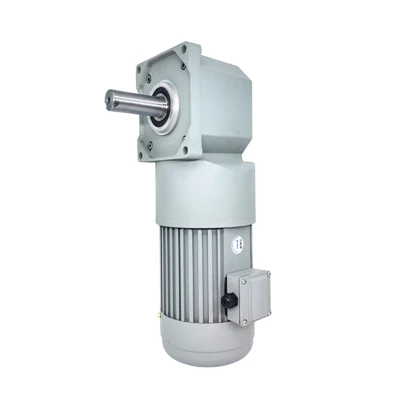
Let’s start with the design and selection phase, because the foundation of a reliable gearbox is built before it ever leaves our factory. Right angle and worm gearboxes have unique failure points that differ from parallel-shaft units, and cutting corners here is the #1 reason we see avoidable failures. Worm gears, for example, rely on a sliding contact between the worm (the screw-like driving gear) and the worm wheel (the driven, toothed gear), which generates 30–40% more friction than rolling contact in parallel-shaft designs. If you pick a gear material that can’t handle that friction, you’re setting yourself up for wear. A few years ago, a mining customer bought a discount worm gearbox for a ore conveyor; they used a standard cast iron worm wheel instead of the chilled cast iron or bronze we recommend for high-load applications. Within six months, the gear teeth had grooved so deeply that the worm started slipping, and the conveyor shut down. Today, when we work with clients, we don’t just hand over a spec sheet—we walk them through load calculations specific to right angle and worm configurations. For right angle units, we emphasize proper shaft alignment right out of the gate. Misalignment in right angle gearboxes is especially damaging because the output shaft is at a 90-degree angle; even a 0.5-degree offset can increase friction loads by 25% and shorten lifespan by half. We always remind customers to match the gearbox’s output torque to their application’s peak torque, not its average. That Idaho potato farmer? He’d used a gearbox rated for 10,000 ft-lbs on a harvester that hit 12,000 ft-lbs during heavy soil conditions—an overload that wore the worm gear prematurely. Selection isn’t just about size; it’s about matching the gear set’s material to the load and aligning the unit correctly before installation.
Next up: installation and mounting, where even a top-tier gearbox can fail if done wrong. I’ve seen right angle gearboxes mounted directly to a steel frame without any shimming, leading to warping of the gear housing under the weight of a conveyor. For worm gearboxes, the worm’s axial load (the force pushing along the length of the worm) is a critical detail that’s often missed during installation. Unlike helical gears, which have opposite axial forces that balance each other, worm gears have a single axial load that has to be supported by the gearbox’s thrust bearings. If you don’t account for that, the bearings will wear out in a fraction of their expected life. Our installation guide for right angle units includes a step for checking housing runout: after mounting, use a dial indicator to measure the runout on the output shaft—we recommend keeping it under 0.002 inches for high-precision applications. For mounting on machinery, we always advise using the factory-supplied pilot holes and bolts, not generic hardware. A construction customer once tried mounting a right angle gearbox with bolts that were half the required size; the housing cracked under the vibration of a concrete mixer, and the gear alignment shifted. Simple, easy fixes here make a huge difference. We also tell customers to never use a cheater bar on the gearbox’s input shaft to align couplings— that can bend the input shaft or damage the worm’s threads, leading to premature wear. Installation is where patience pays off; rushing this step is the fastest way to kill a gearbox’s reliability.
Then comes maintenance, and this is where most customers drop the ball, especially with right angle and worm gearboxes. These units don’t need daily tune-ups, but they do need consistent, specific maintenance that’s different from other gear types. The biggest mistake I see is using the wrong lubricant. Worm gears rely on oil that can handle extreme pressure (EP) and has anti-wear additives to reduce sliding friction. Using a standard gear oil instead of a worm-specific oil can lead to scuffing—where the gear teeth weld together under friction, then break apart as the gears spin. A food processing client once made this mistake, using a standard mineral oil in their worm gearbox for a packaging line; within a year, scuffing had worn the teeth so much that the box leaked metal shavings into the product, leading to a $50,000 recall. We recommend changing the oil every 500 hours for heavy-duty applications, and every 1,000 hours for light loads, but always checking the oil level weekly. For right angle gearboxes, the seal on the input and output shafts is another maintenance point—dry or cracked seals will let dirt and moisture get inside, causing corrosion that eats away at the gear teeth. We tell customers to inspect seals during oil changes, and replace them if they show any signs of wear. Another key maintenance step for right angle units is checking backlash. Backlash is the small amount of play between gear teeth; too little, and the gears bind; too much, and accuracy suffers. For most industrial applications, we recommend backlash between 0.005 and 0.010 inches. Testing backlash is simple: turn the input shaft by hand and measure how far the output shaft moves without turning. If it’s outside that range, adjusting the bearing clearance (a quick fix with shims) will bring it back to specs, extending the gearbox’s life by years.
Finally, monitoring and adapting to your application’s unique conditions. No two worksites are the same, and a gearbox that works perfectly in a dry warehouse will fail in a dusty farm field or a high-moisture mining site. That’s why we encourage customers to add simple monitoring steps, not just for big industrial units, but for smaller right angle and worm gearboxes too. We’ve seen clients install temperature sensors on their gearboxes; a 10-degree spike in operating temperature is often the first sign of a problem—low oil level, misalignment, or worn bearings. For remote applications, like wind turbine yaw drives that use worm gearboxes, we recommend vibration monitoring to catch early gear wear before it leads to a catastrophic failure. Another adaptation: if your application has sudden loads (like a crusher that stops and starts multiple times a day), you can add a fail-safe clutch to the right angle gearbox to absorb shock loads, reducing stress on the worm and gear set. The Idaho potato farmer who had the mid-harvest failure? After we walked him through these steps, he swapped in a gearbox matched to his peak torque, aligned it correctly, adjusted the lubricant to a worm-specific EP oil, and added a quick monthly check of seal condition. The next harvest, his gearbox ran without a hitch, and he told us it saved him another potential $20,000 in lost yields. That’s the payoff: reliability isn’t a one-time purchase, it’s a process that starts when you select the right unit, finishes with careful installation, and lives with consistent maintenance and adaptation.

If you’re working with right angle or worm gearboxes and have been dealing with unexpected failures, or you want to make sure your current units are running at their best, we’re here to help. Our team has decades of experience designing, supplying, and supporting gearboxes for every industry—from agriculture and construction to food processing and mining. We don’t just sell parts; we work with you to tailor solutions to your specific application, so you can reduce downtime and keep your operations running smoothly. Contact us today to discuss your gearbox needs.
Helical Gear Motors References
- Shigley, J. E., Mischke, C. R., & Budynas, R. G. (2004). Mechanical Engineering Design (7th ed.). McGraw-Hill.
- American Gear Manufacturers Association (AGMA). (2018). Standard for Worm Gear Design, Load Capacity, and Thermal Capacity. AGMA 6022-A18.
- Bolton, W. (2008). Gearbox Selection and Application. Newnes.
- The Royal Society. (2015). Industrial Machinery Reliability: Reducing Downtime Through Proper Maintenance. The Royal Society Publishing.
GuangDong Ruisico Transmission Technology Co., Ltd.
Guangdong Ruisico Transmission Technology Co., Ltd. is one of the most reliable right angle & worm gearboxes manufacturers and suppliers in China, also supports customized service. Welcome to buy durable right angle & worm gearboxes made in China here and get quotation from our factory. For price consultation, contact us.
Address: No. 70, Anjing Road, Shengfeng Community, Xiaolan Town, Zhongshan City
E-mail: info@risc-drive.com
WebSite: https://www.risc-motor.com/
