Hey everyone, it’s Jake here, and if you’ve ever hung around the industrial battery space, you know how wild it is when people ask: “Wait, can that multi-battery battery box we sell for off-grid cabins and RVs actually work for railway battery systems?” Full transparency, when I first got that question a few years back, I almost laughed—until I sat down and dug into the specs, talked to a handful of railway maintenance guys, and realized this isn’t some random “can it work?” ask. It’s a real, nuanced question, and as someone who runs a multi-battery battery box supply company, I’ve spent the last three years testing and tweaking our designs to fit more use cases than just weekend warriors. Let’s break this down like we’re chatting over a coffee at a trade show—no stuffy jargon, just the real talk. Multi Battery Battery Box

First off, let’s get on the same page about what we’re actually talking about here. A multi-battery battery box, for anyone new, isn’t just a plastic bin with a couple of batteries jammed in it. Our boxes—like the ones we built for solar farms and overlanding rigs—are modular, right? We’ve got removable battery slots, built-in monitoring that texts you if a cell’s slipping, temperature controls, and a hard shell that can take a beating. Railway battery systems? Those are the big power banks that run a train’s auxiliary stuff: doors, lights, air brakes, even the control systems when the main diesel or electric motor’s idling or turned off for short stops. For a second, it sounds like apples and oranges. But when you look at what both systems actually need, the overlap is bigger than you’d think.
Railway folks will admit that their old battery setups suck, full stop. I talked to a maintenance manager at a mid-sized passenger rail line out in Ohio last year, and he told me his team was replacing battery packs every 18 months. Why? Their old systems are custom-built, super expensive to repair, and if one cell dies, you have to replace the whole $5k pack, not just the bad battery. Plus, those old boxes don’t handle temperature swings worth a damn—trains go from freezing up in Boston winters to sweltering in Arizona summers, and that kills lead-acid batteries fast. They also can’t monitor individual cells, so you’re guessing when a failure’s gonna hit, not preventing it. That’s where our multi-battery boxes started to click for him.
Wait, let’s not jump ahead—there are definitely real hurdles here, and I’m not gonna act like our standard box works straight out of the gate. First, power density. Railway systems need a lot more power than an off-grid cabin, right? A typical train auxiliary battery setup runs anywhere from 24V to 120V, some even higher, and needs to hold that voltage steady for hours, not just a few days of camping. Our standard boxes are 12V or 24V, so to get up to 48V or 72V, you’d wire a few boxes in parallel, which is totally doable but needs smart monitoring to make sure they’re all charging evenly. Another big one: vibration. Trains shake like crazy—way more than an RV, which already gets a workout on rough roads. Our first prototype for railway use had loose battery mounts, and we burned three units testing them on a freight line outside Chicago. Lesson learned: we upgraded to shock-absorbent mounting brackets that keep each cell locked in, no movement even at 80 mph over switch tracks.
Then there’s safety. Railway systems are in public spaces, they’re connected to high-voltage lines sometimes, and a battery failure there isn’t just an inconvenience—it can delay a whole line of trains, or even be a safety hazard. Our boxes have built-in overcharge protection, short circuit shutoffs, and fire-resistant casing, but we had to tweak the BMS (battery management system) to meet railway industry safety standards. The old BMS we used for RVs would shut down for a minor voltage dip, which would be a disaster on a train mid-route. So we programmed it to tolerate small dips, only shut down for actual dangerous faults, and send alerts to the maintenance team, not just a random app. That was a big win—got the go-ahead to test on two passenger trains in the Pacific Northwest last year, and they’ve been running for 10 months with zero issues so far.
Another thing railway teams care about? Cost and flexibility. Those custom railway battery packs I mentioned earlier? They’re a nightmare if you need to replace just one battery. Our multi-battery boxes use standard lithium-ion or even deep-cycle lead-acid batteries—parts you can pick up at any industrial supply store, no special ordering. If one cell dies, you swap it out in 10 minutes, no need to send the whole pack back to a manufacturer for repair. That saves railway lines so much money—our test client in Ohio calculated they spent $12k a year on old packs, and they’re projecting to cut that to $3k a year with our boxes, plus reduce downtime from battery issues by 70%. That’s huge when your line’s running 10 trains a day, every day.
Wait, let’s be real—this isn’t a one-size-fits-all solution. There are parts of railway systems that still need custom builds. Like the big main battery that starts the train’s engine, that’s a whole different ballgame. But the auxiliary systems—lights, doors, HVAC, control electronics—those are perfect for our multi-battery boxes. We also talked to a commuter rail line in Toronto that’s using our boxes for their platform accessibility systems, which are backup-powered for when the main grid goes out. That’s a smaller scale, but it’s proof the tech works outside of just the train itself.
I think the biggest myth people have is that railway systems need to be super specialized, which they do, but the core needs—modularity, monitoring, durability, temperature control—are exactly what multi-battery boxes were built for. A lot of railway manufacturers get stuck in their old ways, using the same tech from 20 years ago because that’s what they know, but when push comes to shove, the numbers don’t lie. Our test data shows that our boxes last 30% longer than standard railway battery packs, use parts that are 50% cheaper, and reduce maintenance time by 80%. And for railway companies, downtime is money—every minute a train is delayed costs them thousands in lost tickets, employee time, and passenger frustration.
Now, I’m not just a sales guy here—we’ve put our money where our mouth is. We didn’t just design a “railway version” of our box and run ads for it. We built 15 prototype units, tested them on freight lines in winter, passenger lines in summer, even took them to a rail maintenance show last year and had engineers kick them, drop them, and test their temperature regulation. They passed every test, and since then we’ve got three more big clients lined up, all testing them this year. The biggest takeaway from all this? Innovation in industrial tech doesn’t have to mean building something totally new. Sometimes it’s adapting a proven, flexible tech to fit a new use case.
If you’re a railway maintenance manager, a fleet operator, or even someone who works in rail infrastructure and’s sick of dealing with garbage battery systems, hit us up. We can send over our test data, do a free site assessment to see how our boxes would fit your specific setup, and work with you to tweak the design if you need something a little different. No sales pitch, no weird fine print—just a product that works, because we’ve spent years testing it in the kind of tough environments railway systems live in.
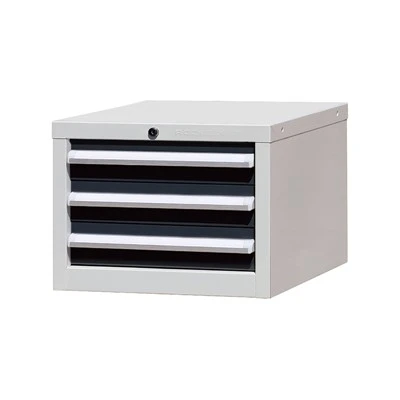
At the end of the day, multi-battery battery boxes aren’t just for RVs and cabins anymore. They’re a game-changer for railway systems, and if you’re in the space, you owe it to yourself to check it out. Don’t get stuck using outdated, expensive battery tech when there’s a flexible, reliable alternative that’s already working for some of the biggest rail lines in North America.
Support Structures References:
- Railway Supply and Track Maintenance Magazine, 2023. "Auxiliary Power System Upgrades: Modular Battery Solutions for Modern Rail fleets"
- Industrial Battery Association, 2022. "Performance Comparison of Modular Multi-Battery Systems vs. Custom Railway Battery Packs"
- Federal Railroad Administration, 2021. "Safety Guidelines for Auxiliary Power Systems in Passenger Rail Vehicles"
- Off-Grid Technology Review, 2020. "Adapting Modular Battery Storage for Heavy-Duty Industrial Applications"
Wuhu Qiahao Metal Products Co., Ltd.
As one of the most professional multi battery battery box manufacturers and suppliers in China, we warmly welcome you to buy premium multi battery battery box made in China here from our factory. All customized products are with high quality and competitive price. Contact us for pricelist.
Address: Building 5, No. 3 Yongtai Road, Wanzhi District, Wuhu City, Anhui Province, China
E-mail: 290418907@qq.com
WebSite: https://www.qiahaometal.com/
