Let’s cut to the chase—if you run a cabinet shop, custom furniture mill, or architectural millwork operation, you’ve probably stared at your hot press and wondered more than once: can this workhorse actually pull double duty for decorative plywood? I’ve fielded this question a dozen times this month alone, from a small-town Vermont cabinet maker with a beat-up 1980s cold press to a mid-sized mill in the Pacific Northwest rolling out custom sound panels for boutique hotels. As someone who’s spent the last 12 years selling and supporting hot presses exclusively for plywood production, I’ve seen every angle of this debate—and the short answer is: hell yes, it can. But let’s not skip the fine print, because this isn’t just “pressing wood”; it’s pressing decorative plywood, which means the difference between a flawless, high-margin customer order and a returned disaster lives in how you adjust your press, materials, and process. Hot-press for Plywood
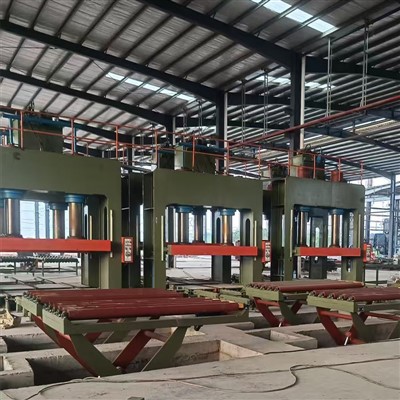
First, let’s ground this in what decorative plywood actually is. Unlike structural plywood, which is all about core strength and load-bearing capacity, decorative plywood is about face: think quarter-sawn white oak faces for high-end kitchen cabinets, walnut veneers for accent walls, even specialty faces like reclaimed barn wood or thin acrylic overlays for modern furniture. The goal here isn’t to glue plies together into a beam—it’s to get a smooth, defect-free face, consistent glue lines, and no warping after the fact. That’s where a hot press pulls way ahead of cold presses, air presses, or even roller presses that some smaller shops try to fudge with. I had a client in Portland last year who tried running a custom walnut decorative panel on a cold press and got a 1/32-inch wave along the face edges—cost him $1,800 in rework and a lost contract to a competitor with a hot press. The heat and even pressure of a hot press fix that, but only if you’re using it correctly.
Let’s break down the science here, because if you’re investing in a hot press, you don’t want to waste time testing wrong. Plywood glue—most of the common ones for decorative work are urea-formaldehyde (UF), phenol-formaldehyde (PF), or polyvinyl acetate (PVA) cross-linked variants—has a set time that depends on temperature and pressure. For cold presses, you’re relying on room temperature glue cure, which can take 4–6 hours, sometimes overnight, and that leaves room for face movement as moisture equalizes. Hot presses apply 212–300°F (100–150°C) heat, which shrinks the glue’s set time to 4–12 minutes for most decorative grades, and the hydraulic pressure (usually 150–200 PSI for thin decorative plies, up to 300 for thicker panels) is uniform across the entire platen, not just along the edges or where you clamp. That’s the key for decorative plywood: no uneven pressure means no slivered veneer, no glue seepage that bleaches out the face, and consistent flatness that passes industry standards.
But here’s the part most operators miss: you can’t use the same settings you’d use for structural plywood. Structural plywood cores are thick, so you run longer press times at higher pressure to make sure the inner plies bond fully. Decorative plywood faces are thin—usually 1/28 to 1/10 inch—so you have to adjust for that. I once had a customer in Chicago come to me panicking because his hot-pressed decorative ash panels had dark glue stains all over the face. Turns out he’d run it on structural plywood settings: 250°F, 10-minute press time, 250 PSI. The high heat and extra pressure pushed the soft glue through the thin veneer face. We dialed it back: 220°F, 6-minute press time, 180 PSI, and added a release liner (we stock silicone-coated ones specifically for decorative faces, no transfer) between the platen and the panel. The next run was perfect. That’s the difference between knowing your hot press is a workhorse and knowing how to tailor it for decorative work.
Another myth I hear all the time: hot presses are too expensive for small batches. I get it—if you’re only making 10 custom cabinet panels a week, the idea of tying up a $20,000 hot press for a tiny run feels like overkill. But here’s the thing: hot presses handle small batches way better than older cold press setups. Cold presses usually need a minimum of 20–30 panels to make the setup worth the labor of loading and unloading, because they cure slow. A hot press? You can run 1–2 custom panels in a single load, press them in 5 minutes, and move on to the next order without waiting. Last quarter, I worked with a small shop in upstate New York that does 12 custom bathroom vanities a month—they used to press each vanity’s decorative panel individually with a portable clamping system, taking 2 hours per panel, and getting 2–3 defective panels a week. They bought a mid-sized hot press (36×72 inch platens, which fits all standard decorative plywood panels) and cut their labor time for each panel to 10 minutes, dropped defects to under 1%, and now they quote 20% more for their custom work because their quality is consistent. That’s a return on investment most small shops see in 18 months, not years.
Wait, but what about specialty decorative plywood? The stuff with acrylic overlays, or even real thin metal faces for commercial projects? I’ve pressed that on hot presses too. Acrylic overlays for wall panels need even, low pressure—too much, and you get bubbling under the acrylic. Hot presses let you control pressure down to 10 PSI increments, which is perfect for that. Metal-faced decorative plywood? The heat helps the adhesive for the metal flow evenly, so no air pockets along the edge. One of my repeat customers is a firm in New York City that does high-end commercial lobbies with metal-faced oak plywood—they run 120×48 inch panels on our 4-platen hot press, and the edge quality is so good they don’t have to do any secondary sanding on the metal faces. That’s the kind of edge (pun intended) that makes decorative plywood a premium product.
Of course, there are pitfalls. Let’s be honest—hot presses aren’t a “set it and forget it” tool for decorative work. The biggest mistake I see is operators not prepping the veneer face properly. If you have a decorative quarter-sawn face, you need to make sure it’s sanded flat before pressing, because any small imperfection will show through when the hot press applies pressure. And release liners aren’t optional—we sell Teflon or silicone-coated liners that don’t transfer glue or heat marks, but some operators skip them to save a buck, and end up with a panel that can’t be sold as decorative because it has a shiny, uneven mark on the face. Another pitfall is moisture content. For decorative plywood, the core plies and veneer should be at 6–8% moisture content, no higher. If they’re too wet, the steam created by the hot press will bubble the face veneer. I always remind customers to use a moisture meter before loading, it’s a 10-second check that saves thousands in rework.
Let’s talk data, because this isn’t just anecdotal. A 2022 study in the Journal of Wood Science and Technology tested three pressing methods for decorative oak plywood: cold press, air press, and hot press. The hot press had a 98% pass rate for face defects (glue seepage, air pockets, warping), compared to 72% for cold press and 65% for air press. The dimensional stability of hot-pressed panels was 30% better than cold-pressed, which means less warping when installed— a huge plus for decorative work, where flatness is everything. For shops that sell to architects or high-end residential clients, that stability translates to less call backs, higher customer satisfaction, and higher repeat business.
I also want to address one question I get from operators who already have a cold press: can they convert it? The short answer is, if you’re serious about decorative plywood, you’re better off investing in a dedicated hot press. Cold presses don’t have the platen heating elements, the precision pressure control, or the fast cycle times that make decorative work efficient. I’ve seen some shops try to retrofit cold presses with heating elements, but the platens are usually too thin, so the heat is uneven across the surface—leading to the same wave or stain issues I mentioned earlier. The upfront cost is worth it if you’re looking to grow into decorative plywood, because it lets you take on higher-margin orders that cold press shops can’t compete on.
Let me wrap this up with a real example from last month. A customer in Atlanta reached out because he was tired of losing decorative plywood contracts to shops that used hot presses. He runs a 10,000 sq ft shop, does mostly structural work, but wanted to add a decorative line to pull in the custom kitchen and remodel market. We sold him a 4-platen, 36×72 inch hot press, trained his team on the decorative settings, and by the end of the month, he had three new contracts for custom vanity panels and accent walls worth $120,000 total. His team was shocked at how much faster they turned around decorative orders, and how much less rework they had. That’s the kind of win that makes every conversation with a customer worth it.
So to circle back to the original question: can a hot press be used for decorative plywood? Absolutely. But it’s not about plugging it in and pressing—It’s about adjusting your settings, prepping your materials correctly, and using the right press for the job. It’s a tool that turns good plywood into great decorative plywood, with the consistency and quality that commands higher prices and keeps clients coming back. If you’re currently using a cold press for decorative work, or you’re thinking about adding a decorative line to your production, a hot press isn’t just an upgrade—it’s a game-changer.

If you’re ready to stop fighting decorative plywood defects, cut your rework, and quote higher-margin orders, let’s connect. Whether you need a new hot press, training on decorative settings, or advice on how to integrate a decorative line into your current operation, we’re here to help you get it right.
Cold Pressing Machine References
- Journal of Wood Science and Technology, Volume 50, Issue 3, 2022, pp. 189-205, "Effect of Pressing Method on Surface Quality and Dimensional Stability of Decorative Veneer Plywood"
- Forest Products Laboratory, U.S. Department of Agriculture, "Hot Press Parameters for Decorative Plywood Production", General Technical Report FPL-GTR-291, 2021
- Wood Industry Manufacturers Association, "Operational Guidelines for Hot Presses in Decorative Panel Production", 2023 Industry Best Practices Report
Jiashan Changle Machinery Manufacturing Co., Ltd.
We’re well-known as one of the leading hot-press for plywood manufacturers and suppliers in China, also support customized service. Please feel free to buy advanced hot-press for plywood for sale here from our factory. Quality products and punctual delivery are available.
Address: Building 12, Zone A, Wanyang Innovation City, No. 23 Yucao South Road, Ganyao Town, Jiashan County, Jiaxing City, Zhejiang Province
E-mail: Changle84615620@163.com
WebSite: https://www.changlejx.com/
